Abaqus tutorials Abaqus tutorials
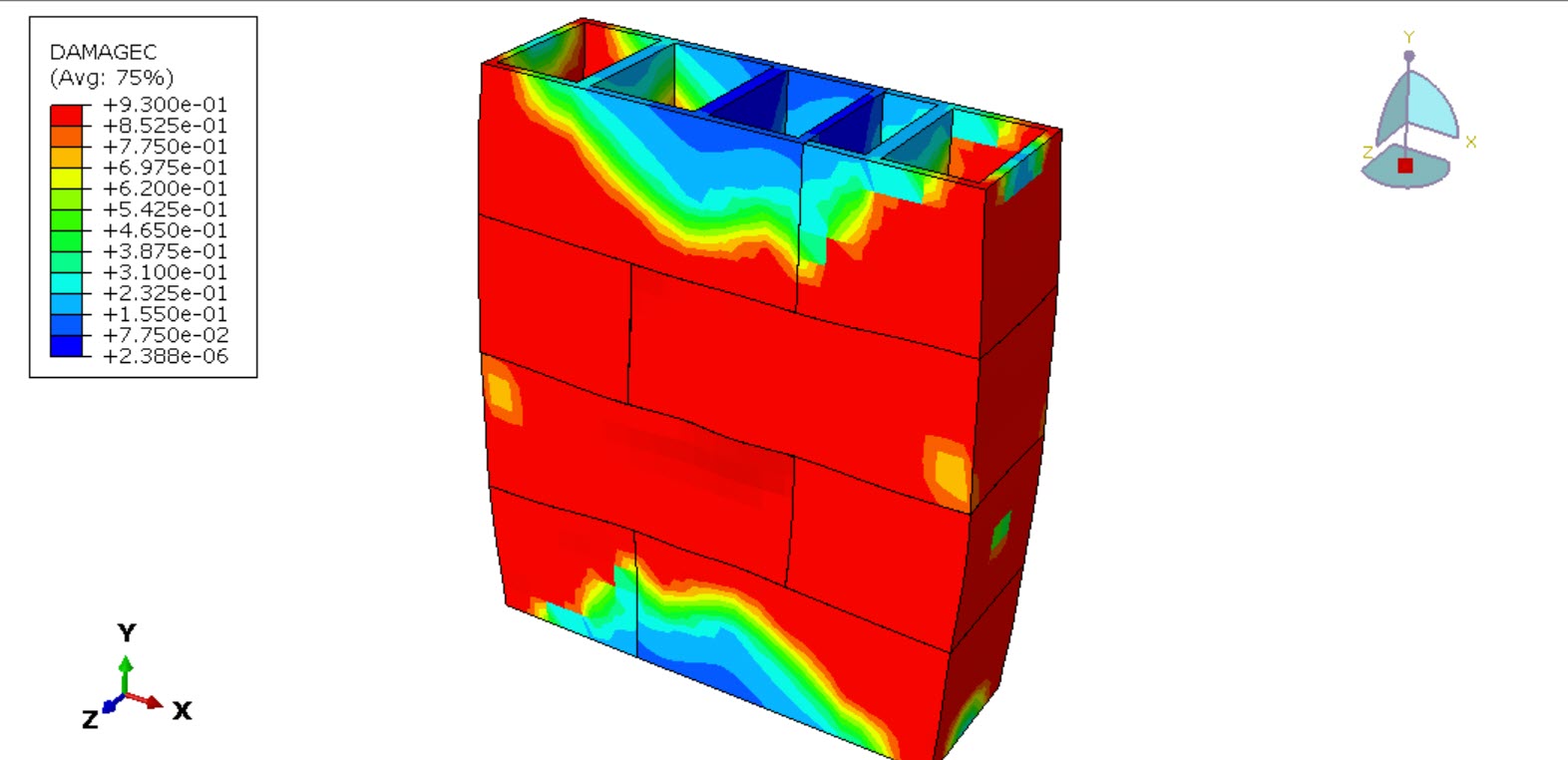
Masonry walls constructed from hollow (empty) concrete blocks are widely used in residential and low- to mid-rise buildings due to their cost efficiency, thermal performance, and ease of construction. Despite these advantages, their structural behavior under compressive loading is complex, governed by the interaction between blocks, mortar joints, and the presence of voids within the units. Understanding the compressive response and failure mechanisms of hollow concrete block masonry is therefore essential for safe and economical structural design. All the blocks are modeled as three-dimensional solid parts. You can see a figure of the assembled parts below
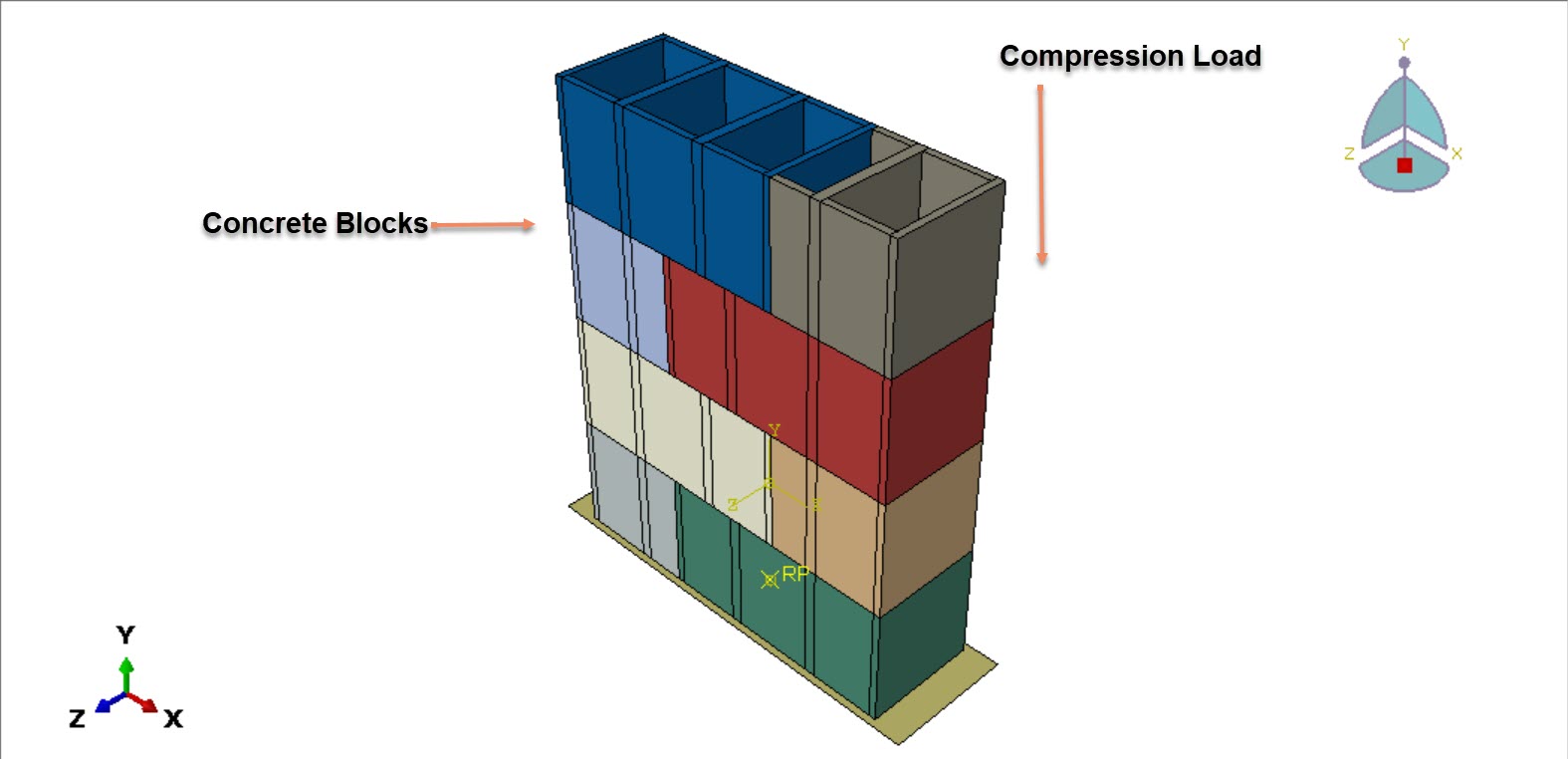
Experimental compression tests provide valuable insight into strength, stiffness, and crack development; however, they are often time-consuming and costly. Numerical modeling offers an efficient complementary approach that allows detailed investigation of stress distribution, damage evolution, and parametric influences such as material properties and interface behavior
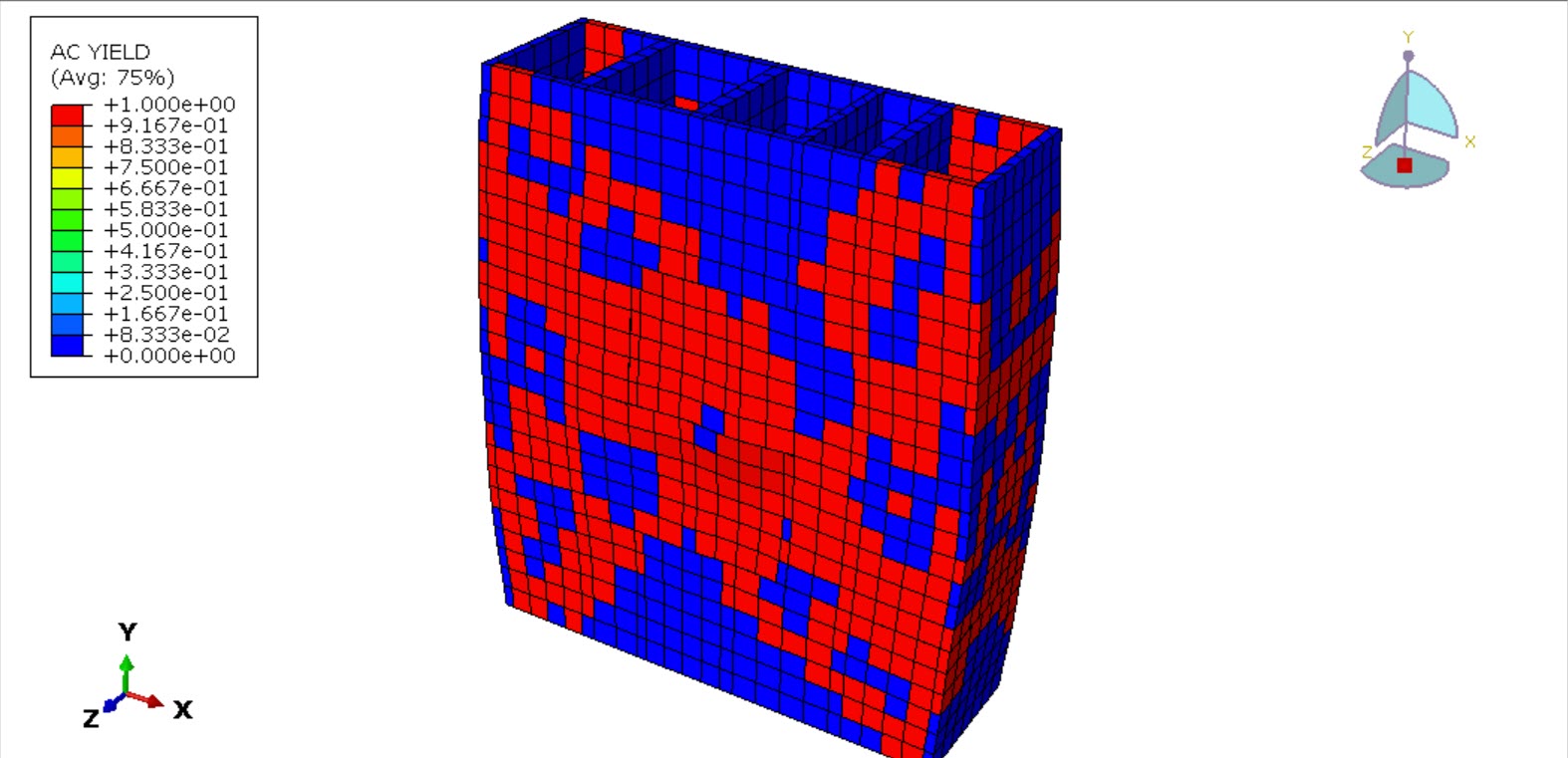
In this study, a finite element (FE) compression test of an empty concrete block masonry wall was performed using Abaqus. The analysis employed the General Static solver to simulate quasi-static loading conditions. The nonlinear behavior of concrete blocks and mortar was represented using the Concrete Damaged Plasticity (CDP) material model, which captures key features such as tensile cracking, compressive crushing, stiffness degradation, and irreversible damage under cyclic and monotonic loading
To realistically simulate the interaction between masonry components, cohesive interaction was defined at the block–mortar interfaces. This approach enables the modeling of bond behavior, including initiation and propagation of interface damage, separation, and potential sliding failure. Such interface modeling is critical in masonry analysis, as joint performance strongly influences global wall strength and failure mode
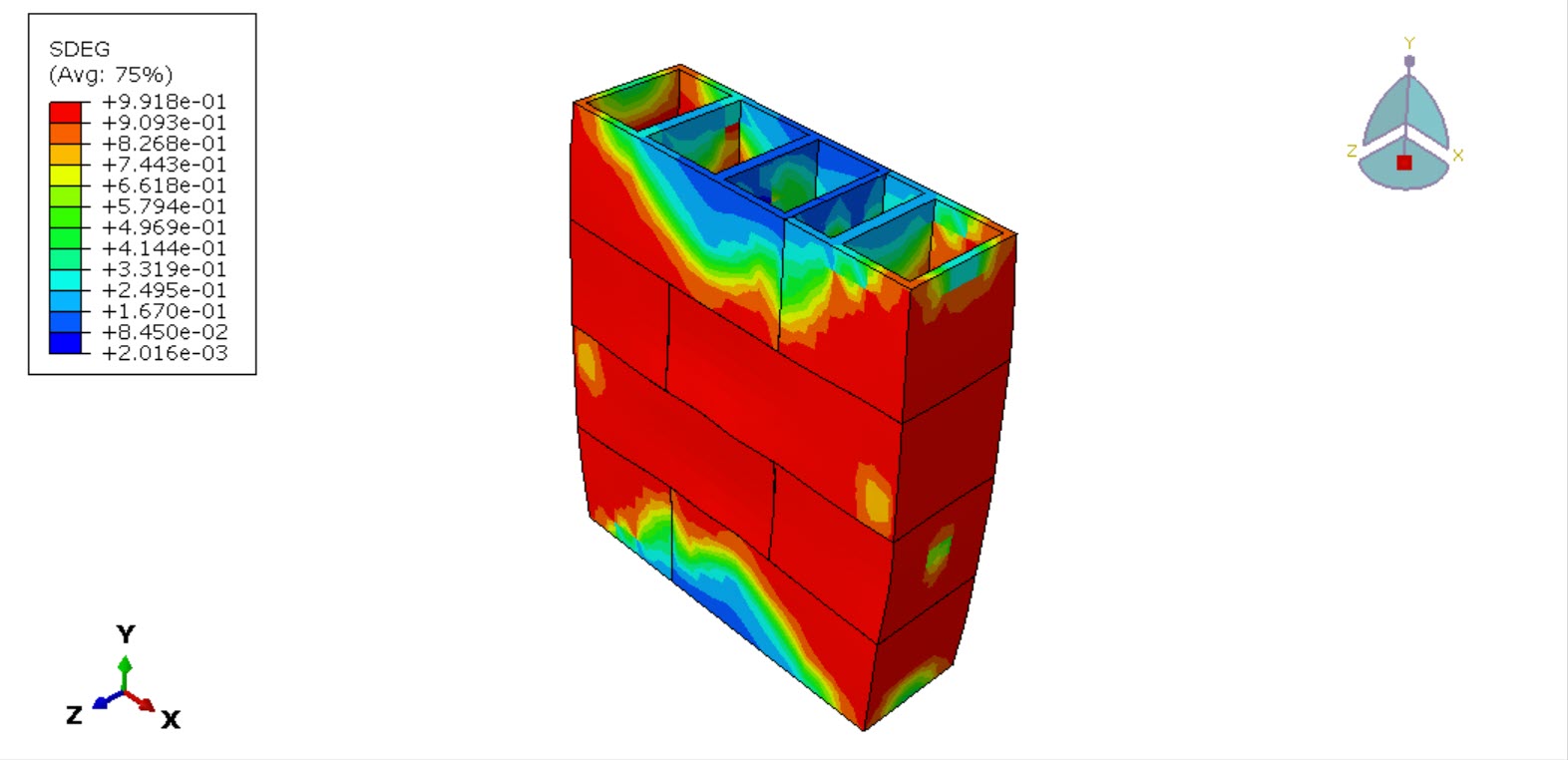
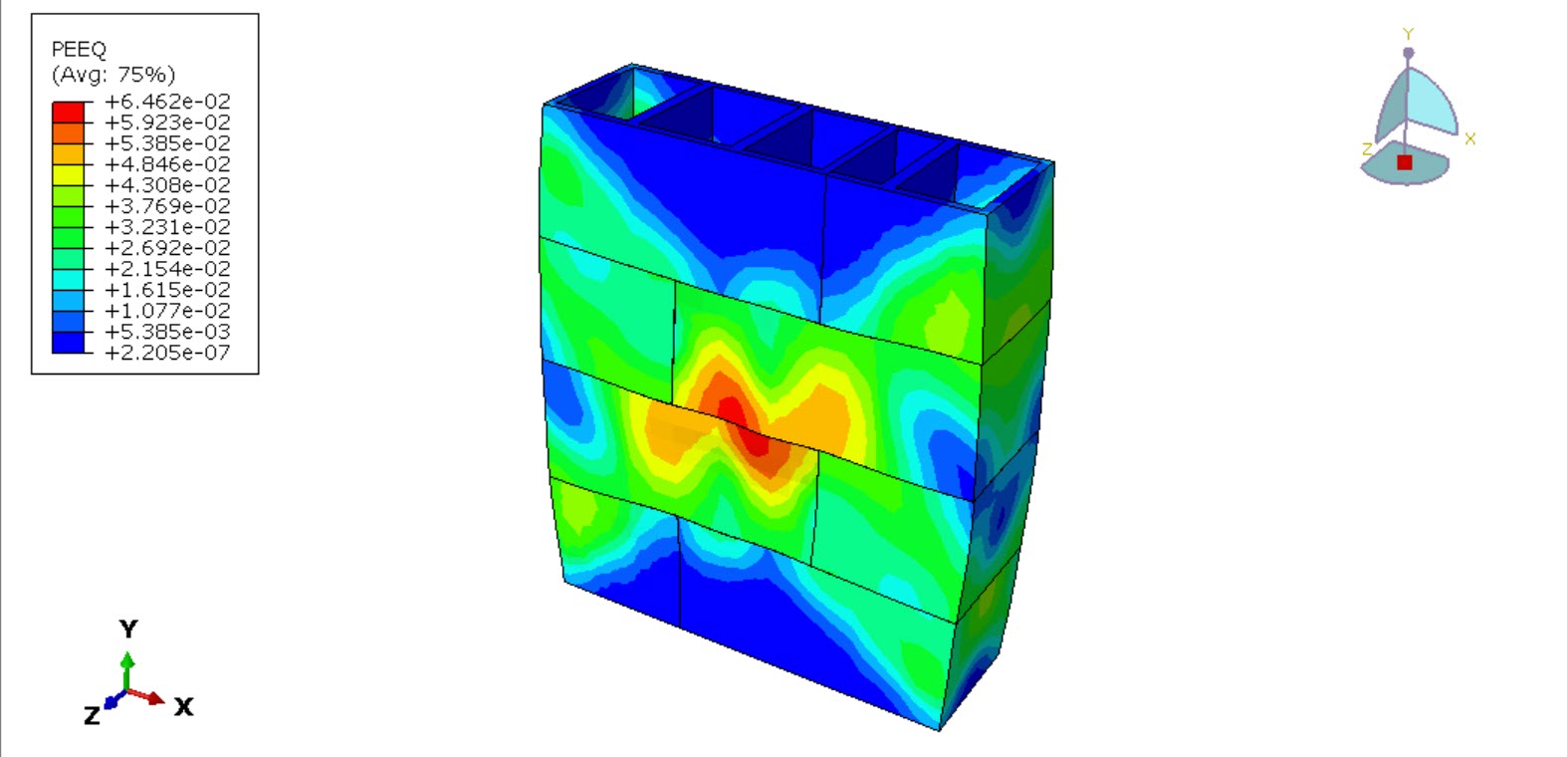
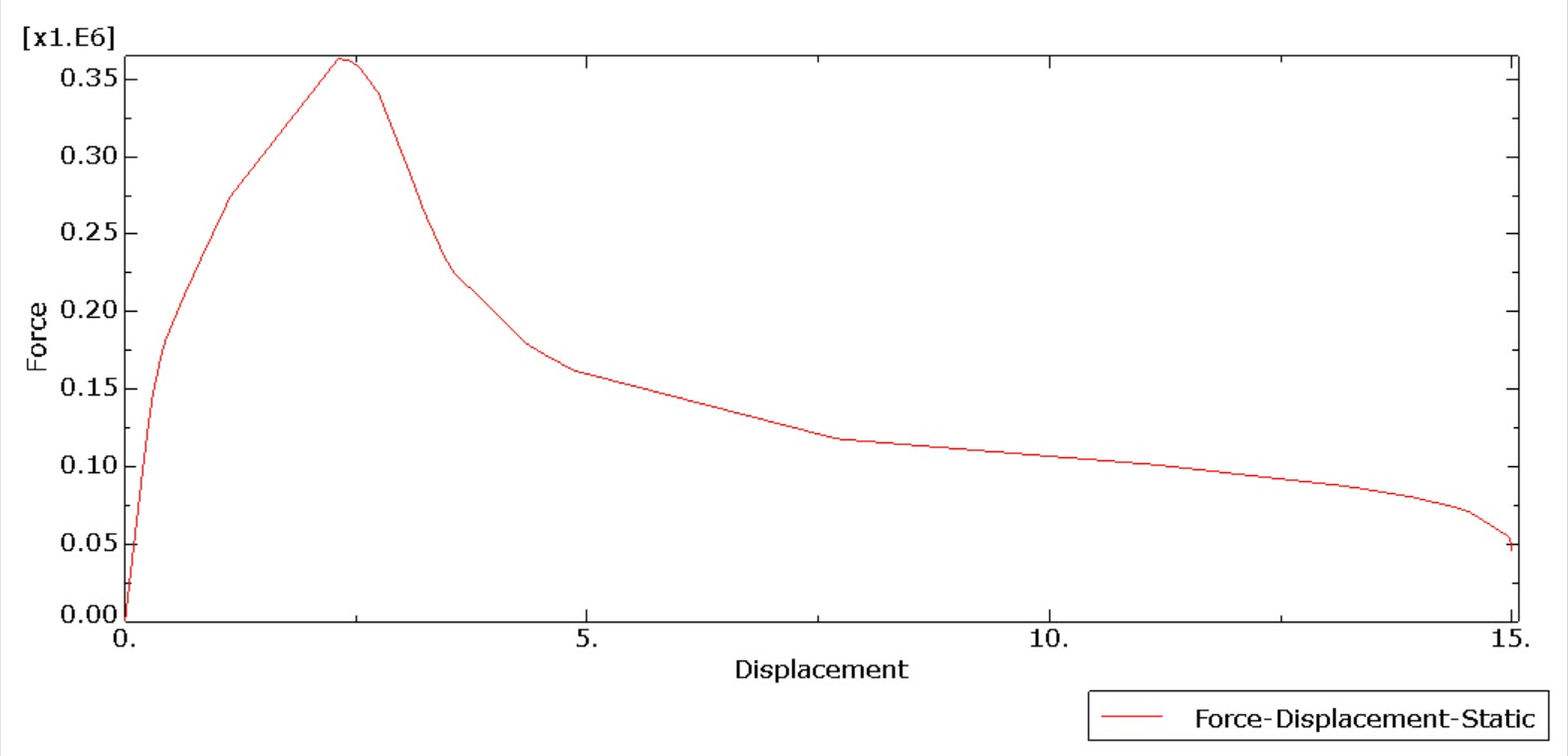
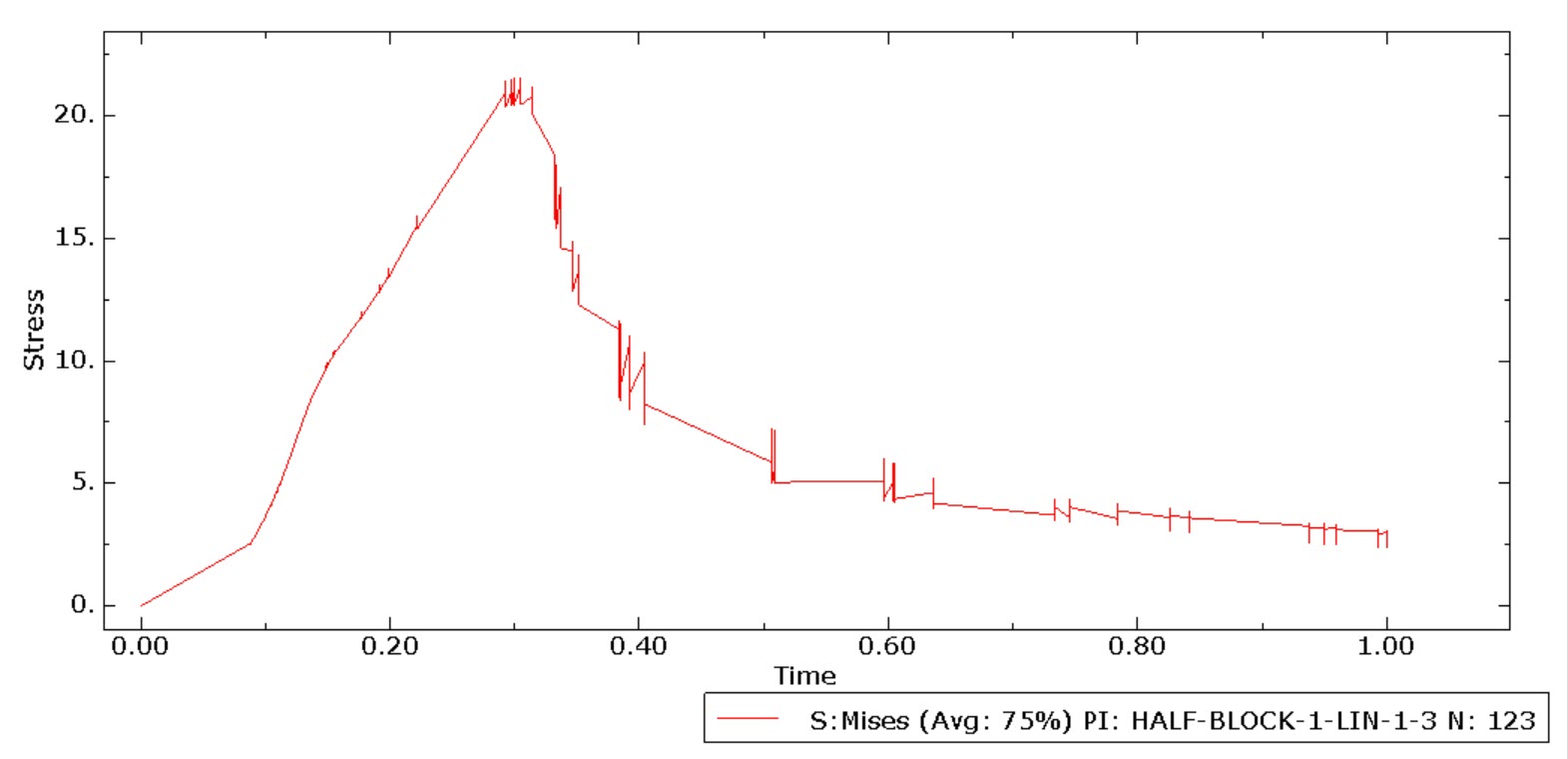
The numerical model aims to reproduce the compressive load–displacement response, stress distribution, and crack/damage patterns of the hollow block masonry wall. The results provide insight into structural performance, validate modeling assumptions, and support the development of reliable predictive tools for masonry design and assessment
You can provide this simulation’s CAE, INP, and English video files here. The price of these files is Thirty Euros. You can click on the button below to begin the process
Our Payment methods are: Tether, Bitcoin, TRX, PayPal, Visa, or Mastercard. Just before payment, send us an email to this address: abaqusfem.com@gmail.com